Lenten Reflection: The Carrying of the Cross

Tags

, ,

Titian_1565_Carrying of the Cross

Titian, Carrying of the Cross, c. 1565

This is the fourth in our series reflecting on the Gospel accounts of Christ’s passion and death on a cross using the Sorrowful Mysteries of the Holy Rosary as our guide. We have looked at Christ’s agony in the garden of Gethsemane where he took on the sins of the world, His brutal scourging at the hands of the Roman guards and the crowning of thorns. Today we will look at the torturous journey to Golgotha as Christ carried His own cross to be used in His crucifixion.

Continue reading

Lenten Reflection: The Crowning With Thorns

Tags

, ,

Gerard van Honthorst_1622_Crowning with Thorns

Crowning with Thorns, Gerard van Honthorst, c. 1622

And the soldiers led him away inside the palace (that is, the praetorium); and they called together the whole battalion. And they clothed him in a purple cloak, and plaiting a crown of thorns they put it on him. Mark 15:16-17

During Lent, we are reflecting on Christ’s Passion, Death and Resurrection. So far, we have reflected on the Agony in the Garden and The Scourging. This week we will look at the third Sorrowful Mystery of the Holy Rosary, the Crowning with Thorns.

Continue reading

Lenten Reflection: The Scourging

Tags

, ,

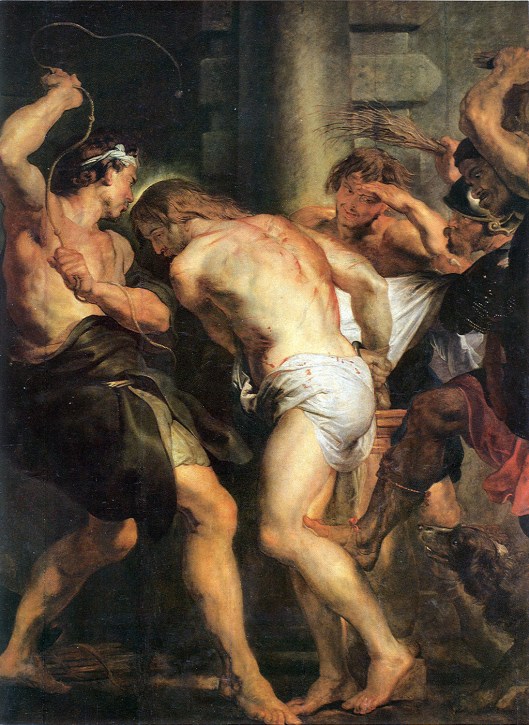
Rubens_1617_Flagellation of Christ

Flagellation of Christ, Peter Paul Rubens, c. 1617

I have seen his ways, but I will heal him; I will lead him and requite him with comfort…Peace, peace, to the far and to the near, says the Lord; and I will heal him. Isaiah 57:18-19

During Lent, we are reflecting on Christ’s Passion, Death and Resurrection. Last week, we reflected on the Agony in the Garden. This week we will look at the scourging of Christ at the pillar.

Continue reading

Lenten Reflection: Christ’s Agony in the Garden

Tags

, , ,

fra-angelico_1442_agony-in-the-garden

The Kiss of Judas, Fra Angelico, c. 1442

Who has believed our message and to whom has the arm of the Lord been revealed? He grew up before him like a tender shoot, and like a root out of dry ground. He had no beauty or majesty to attract us to him, nothing in his appearance that we should desire him. He was despised and rejected by men, a man of sorrows, and familiar with suffering. Like one from whom men hide their faces he was despised, and we esteemed him not. Surely he took up our infirmities and carried our sorrows, yet we considered him stricken by God, smitten by him, and afflicted. But he was pierced for our transgressions, he was crushed for our iniquities; the punishment that brought us peace was upon him, and by his wounds we are healed. We all, like sheep, have gone astray, each of us has turned to his own way; and the Lord has laid on him the iniquity of us all. Isaiah 53:1-6

On this the first Sunday of Lent, we are called to a closer relationship with Christ as we focus on His loving sacrifice for the forgiveness of our sins. As we journey through Lent, we ask you to reflect with us on the Sorrowful Mysteries of the Holy Rosary: The Agony in the Garden; The Scourging; The Crowning with Thorns; The Carrying of the Cross; and The Crucifixion. Finally, on the eve of Easter, we will reflect on Christ’s Resurrection. Our prayer is that these reflections over the next several weeks will help you gain greater understanding of Christ’s love for you and for your spouse.

Continue reading

Defusing the Attacks of the Enemy: Trust in God

Tags

, , ,

natoire_the_rebuke-of-adam-and-eve

The Rebuke of Adam and Eve

Charles Joseph Natoire (c. 1740)

Matrimony is one of the two sacraments of service in the Catholic Church, the other being Holy Orders. These sacraments “are directed towards the salvation of others; if they contribute as well to personal salvation, it is through service to others that they do so.” (Catechism of the Catholic Church, 1534). Along with the Sacraments of Baptism, Confirmation, and Eucharist, “they ground the common vocation of all Christ’s disciples, a vocation to holiness and to the mission of evangelizing the world” (CCC, 1533).

My child, when you come to serve the Lord, prepare yourself for trials. Sirach 2:1

Continue reading

Marriage: Covenant or Contract?

Tags

, ,

covenant

He is mindful of his covenant for ever… Psalm 105:8

A contract is a mutually beneficial agreement entered into by two parties. The contract can be broken when it is no longer beneficial to one of the parties. In contrast, a marriage covenant is a lifelong agreement entered into by two parties and God that can never be broken. The Hebrew word for covenant is berith, derived from a root which means “to cut.” Entering into a covenant in the Old Testament involved the ritual of cutting or dividing an animal into two parts with the contracting parties passing between them to seal the agreement. Both parties vowed an oath that it be done unto them as was done to this animal if they violated the terms of the agreement.

Continue reading

The True Meaning of Love

Tags

, ,

bride-groom-facing-cross_03Be completely humble and gentle; be patient, bearing with one another in love. Ephesians 4:2
Today the Church celebrates World Marriage Day, giving honor to husbands and wives who faithfully live out their covenant in the Sacrament of Marriage. Two days from now, our culture will celebrate love on Valentine’s Day. Advertisers work hard convincing us that love is all about warm, fuzzy feelings, cards, candy and flowers.

Christian husbands and wives are in a unique position to show the world what real love is. True love is the total gift of self for the betterment of another. It involves sacrifice. Love is doing what is right even when it does not feel very good. Love is meeting the needs of someone else before your own needs. We can love because God first loved us. The perfect image of this unconditional love is Jesus nailed to the cross for the forgiveness of sins. Ask God for the grace to be able to love your spouse in this self-sacrificial way.

Continue reading

February: Dedicated to the Holy Family

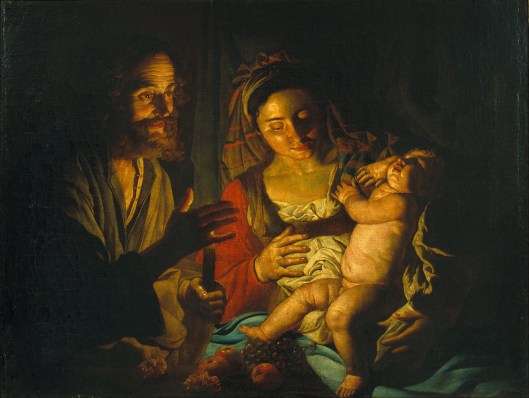
holy-family-09

The month of February is traditionally dedicated to the Holy Family. It bridges the seasons of Christmas and Easter. Between the events of Christ’s birth and the beginning of His public ministry, the Church holds up the Holy Family as the example to be emulated in our Christian family life.

The month begins with the feast of the Presentation of the Lord on February 2, forty days after the birth of Jesus. On this day, also known as Candlemas, the liturgy includes the blessing and procession of candles, symbolizing the light of Christ coming into the world.

Continue reading

Two Worldviews on Love and Sex

Tags

, ,

mother-teresa-abortion

Last week, we summarized St. John Paul II’s vision of marriage preparation where parents have the primary responsibility to prepare their children for marriage (remote preparation from birth to young adult). The example of their marriage, both good and bad, shapes their children’s understanding of marriage and shows them how to live out this important vocation. Is your marriage a good and holy example for your children? If some areas could stand improvement, do not lose heart. It is never too late to start living your marriage as God intends, loving your spouse as Christ loves His Bride, the Church.

But what is love? The word is used in so many different ways today that it has lost its true meaning. We say that we “love sports,” “love traveling,” or “love to eat.” The intimate union of a man and woman in the martial embrace has been reduced to “making love.” This same phrase is also used to describe sex between any number of consenting adults, or between adults and children, or even between children, including individuals of the same sex. It is no wonder that our society is confused on the true meaning of love.

Continue reading

St. John Paul II: The Stages of Marriage Preparation

Tags

, , ,

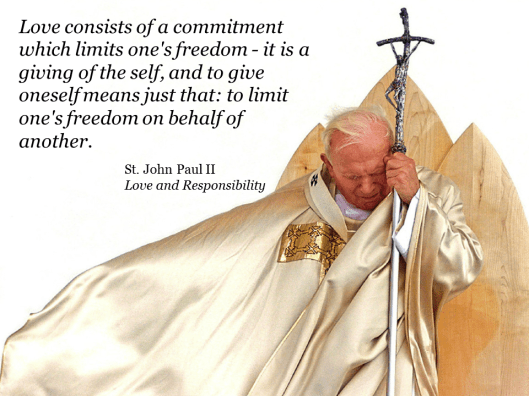
jpii-giving-of-self

“Marriage preparation has to be seen and put into practice as a gradual and continuous process.”

St. John Paul II wrote these words in Familiaris Consortio (On the Christian Family in the Modern World). In this exhortation, he introduced the concept of a three-stage marriage preparation process: remote, proximate and immediate (Familiaris Consortio, 66). In a previous blog post, we briefly described the three stages and discussed what constitutes proper marriage preparation according to Canon law. .

Here, we will further describe the process by summarizing the pastoral document entitled, Preparation for the Sacrament of Marriage, issued by the Pontifical Council for the Family.

Continue reading